What a VC is Thinking About… When they read your Pitch Deck
Lots have been written about how to approach investors, and how to build pitch decks. But I wanted to give Founders a real insight into what the Venture Capital (VC) investor is really thinking when you, the founder, is interacting with them.
So, this is blog one of a three part blog series giving founders an insight into what Venture Capital (VC) investors are thinking at each stage of the investment process.
The first blog explores, what happens on the other side of the table when your deck lands in an investors inbox.
The following blog is a summary of my work as a Partner at Octopus Ventures and my presentation on Investor Readiness, as a guest lecture at Oxford University, Said Business School.
8 Seconds
Eight seconds. That is roughly how long a VC may spend on each slide in a Series A pitch deck on the first pass.
In one DocSend dataset, investors spent 3 minutes and 11 seconds on a 25-page deck (this is of ones they actually spend any time on).
Slightly rude after you have spent three weeks debating fonts and slide order, but useful to know. A first pass is fast. The deck has to communicate before the reader loses the thread.
I once heard a top US VC (I think it was Sequoia, but it may have been Benchmark) describe the goal of a pitch deck in very simple terms:
“It lands the VC wanting more, and earns the founder a phone call”.
Bit of self-importance there but we roll with the sentiment.
What a pitch deck is not trying to do is compress your entire company into 20 slides (or sometimes 40).
A deck doesn’t need to answer every question. In fact, trying to do so can be counterproductive. It needs to create enough impact, confidence and curiosity for the investor to want to find out more and get on the phone.
On more than one occasion I’ve got to slide 14 and I still don’t know what the company does, and whether it would be suitable for my fund.
What usually happens in these circumstances is that the decks spends 10 slides describing the size of the problem, the history of the market and the inadequacies of existing solutions.
By the end, I may be thoroughly convinced that the problem exists. However; I’ve just got distracted on slide 5 and now I’m flipping between the product architecture and advisory board to find out what your solution is.
Your pitch deck is not a thriller. You do not need to save the reveal for the end. You need to show you are right and exciting for the fund and they should have a call with you.
The VC Hierarchy of Need
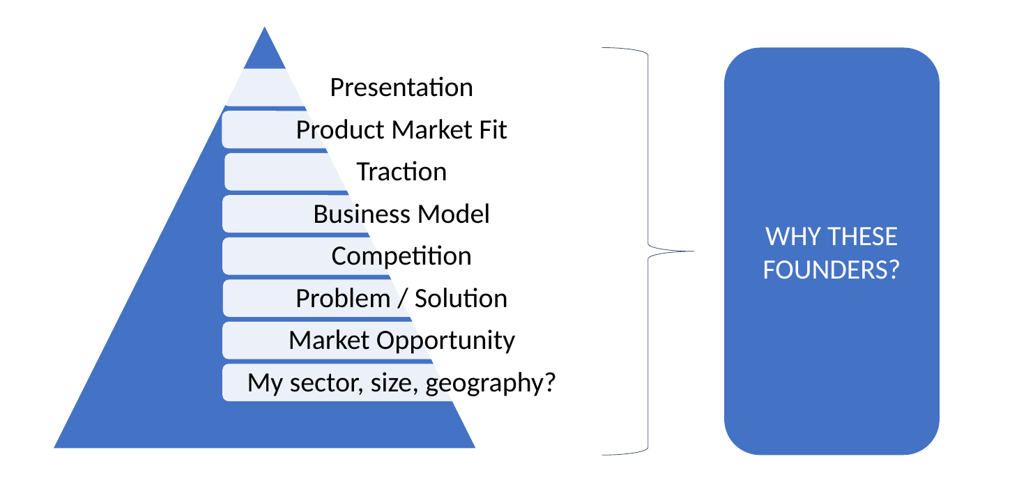
Taken from Investor Readiness Lecture Oxford University
When I look at a business, I think about a rough VC hierarchy of needs (think Maslow for Patagonia Gilets). At the base are practical filters. Is this my sector? Is it the right stage and size for the fund? Is it in a geography where we can invest?
A brilliant deck cannot solve a mandate mismatch; but a good one will make it clear quickly that there is a match! Don’t waste your time trying to convince an investor that can’t invest in you.
I’m a B2B software / Enterprise AI investors. Therefore, no matter how good your new drinks brand is I can’t invest in your company. Wish each other well and move on.
Assuming it passes those tests, the questions move upwards:
- Is the market attractive?
- Is the problem real?
- Is the solution materially better?
- What does the competition look like?
- Does the business model work?
- Is there genuine traction and evidence of product-market fit?
Notice that there’s little in the way of presentation (how pretty it is). No amount of fluff can replace what the business is about and how well it’s doing.
In fact there may be a direct correlation between the quality of a company and how much time is spent on AI art generation (e.g. more time less quality).
Why these founders
Running through every layer is one overriding question: why these founders?
VCs do not invest in pitch decks. We invest in people who will spend years, or perhaps more recently months, turning an incomplete plan into a company.
Founder-market fit is much broader than a collection of impressive employer logos. I am usually trying to understand four things:
- Why are these people right for this problem?
- Can they motivate a team and customers?
- Do they have conviction without becoming dogmatic?
- And do I trust them?
Perhaps you have lived the problem, developed a rare technical insight or built unique distribution. Show me the thread connecting this team to this opportunity.
Market Opportunity – The Curious Topic of TAM
Total Addressable Market (TAM) is a topic I’ve been interested in since entering VC. I’ve written lots about TAM so if you’re interested check out this blog.
VCs care about market size because a venture fund needs the possibility of a very large outcome. But just sticking a big number in doesn’t always make sense.
I’m often asked questions about TAM, SAM and SOM, or Bottom-Up vs Top-Down TAM construction. For me there is only one way to calculate TAM and that’s Bottom-UP.
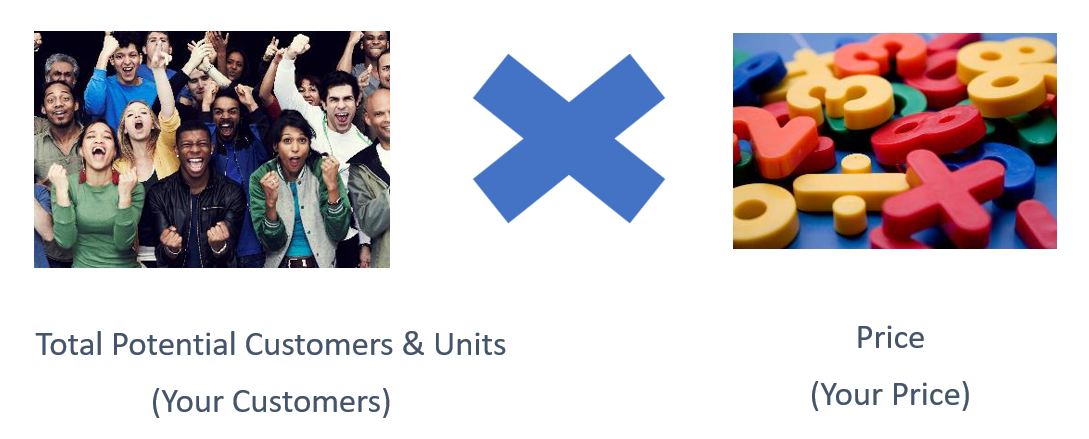
Taken from a presentation on “We need to talk about TAM”
Spoiler, Bottom-Up is the only way you can show to the VC you understand your Ideal Customer Profile (ICP) and how your business model will interact with that customer group. Use Top-Down (existing market data) to validate your bottom-up analysis but other than this it’s just a lazy and insufficient way of calculating TAM.
If I read a pitch deck that has poor, or lazy, TAM analysis then I’ll just start doing it myself. You don’t want me to do that. You know your market and the opportunity far better than I do, so best not let the VC get it wrong and dismiss your business out of hand.
These are three common mistakes when calculating TAM:
- Finding the biggest number possible that makes no sense. Imagine you are selling ice cream on a beach in the UK. Telling me the global ice cream market is worth $70 billion is not useful. Your addressable market depends on the customers you can reach, how often they buy and what you charge.
- Sizing the problem or sector. Climate change might be a Trillion Dollar problem. Cyber Security might be a $100bn market. But that’s not your TAM. Your time is the customers you serve in a year multiplied by price.
- Small percentage of a huge market. “We only need 1%” makes ever VC shudder. One per cent is not a market analysis. It is an arbitrary share of somebody else’s large number. Why one per cent rather than ten, or 0.01? More importantly, who are the customers behind it?
VCs are partly to blame. We ask for a huge market, so founders find the largest research report available. But a bottom-up view is more persuasive: relevant customers, multiplied by realistic units or frequency, multiplied by price.
A good market slide shows that you understand the initial customer and pricing. Then shows credible adjacencies. Start with a market you can explain and tilt (ease of moving into other markets) into the larger vision.
Do this right and it can be one of the most compelling slides in your deck. Do it wrong and you appear not to know your market.
Tell me what you do – quickly
Problem – Solution
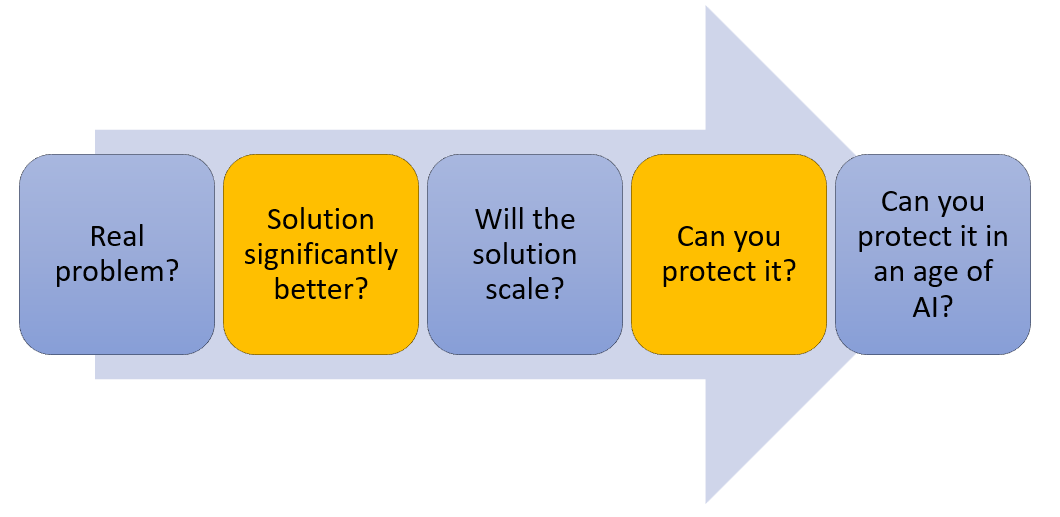
Taken from Investor Readiness presentation
By the end of the first few slides, I should be able to explain three things to someone else: who the customer is, what the product does and why it is meaningfully better than the current way of doing things.
Founders know their markets in extraordinary detail, so they often take investors on the full intellectual journey that led to the company. The history and regulation may be interesting. None is useful if I still do not understand the product and where you fit.
My preferred framing is: problem, solution, protection.
I love this slide deck from company X’s Series A. It’s about 20 years old but you still know why it was founded…..
Can you guess the company?
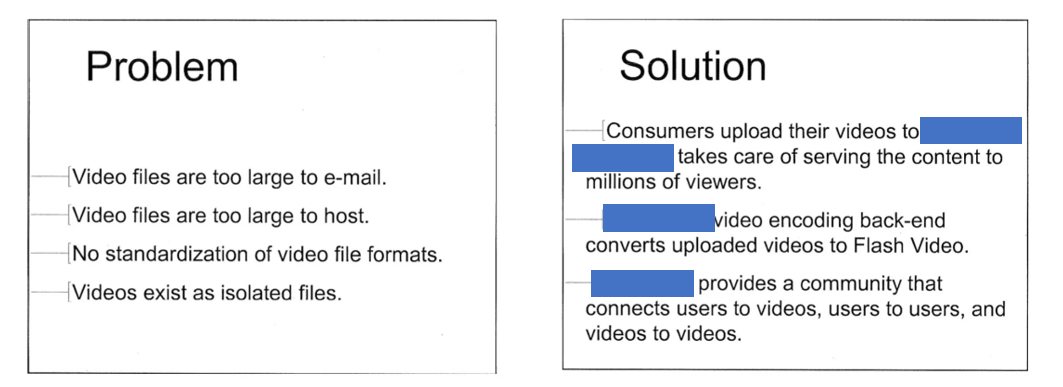
https://www.pitchdeckhunt.com/pitch-decks
What I’m asking myself is:
- Is it a real problem?
- Is the solution significantly better?
- Will it scale? Can you protect it?
- And, increasingly, can you protect it in an age of AI?
Please please avoid jargon… there’s a lot of it.
“We use AI to transform a $50 billion industry”
does not answer those questions, and neither does
“We are at the intersection of commerce and export”.
Two headlines on pitch decks I’ve read recently.
Competition
Please do not say you have no competition.
Competition includes similar products, different ways to solve the problem, future entrants and customer alternatives. Sometimes the strongest competitor is a spreadsheet, another employee or doing nothing.
AI makes this more important. Don’t kid yourself that someone really knows what AI means to competition more generally. But worth having a clear answer for your solution.
- Can the product be replicated quickly by a model or an AI-native entrant?
- Do you own distinctive data?
- Are you embedded in a critical workflow?
- Can you become a system of record?
- Do you control distribution?
You do not need an impenetrable moat on day one. You do need a credible explanation of why your advantage can strengthen as the company grows and your right to win over others.
Sorry but traction matters
For many entrepreneurs the beauty is in the solution and the potential, not what happened yesterday.
It’s frustrating to a lot of entrepreneurs but explaining and evidencing traction will usually be the most impactful slide for investors; especially when you are at post seed stage.
I hate to say it but chances are the VC has flipped through the first 15 slides to try and see the traction before even working out if they like the company (or even what it does).
It takes 10 seconds to figure out what the ARR is and if you’re a Series A investor there isn’t much point reading the first 15 slides if the company still is in design phase. It may well be worth putting the traction headlines on slide 1. Saves everyone a bit of time.
You do not need every metric in the main deck; for SaaS or AI companies that’s usually ARR and ARR growth. If you are pre-revenue what else can you point to?
- Number of users?
- Number of positive trials?
- Number of people on the waiting list?
Pick the measures that best prove the story and label them clearly.
The VC is trying to discover:
- What is growing?
- Who is paying?
- Are they staying?
- What suggests this is becoming repeatable rather than a series of heroic founder-led wins?
The final read through
I hope you’ve found this article interesting. Perhaps some of it a bit frustrating. There is no perfect pitch deck and not every VC will agree with me.
But if you can take one take away, believe that sometimes less is more, and hopefully that will bring you the greatest impact in the shortest amount of time.
Blog 2: What a VC is thinking in diligence
In the next article, I will look at what VCs are really trying to establish during diligence, why polished decks so often trip over the data beneath them, and how founders can prepare without turning the process into a six-week archaeological dig.
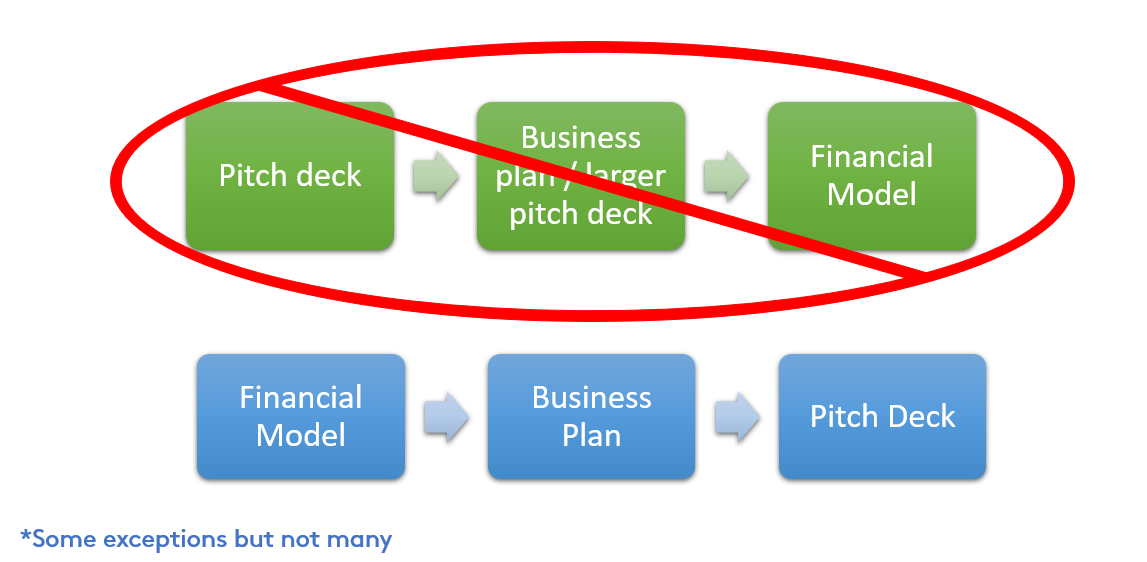
But one last tip that joins the two topics. Before you create your pitch deck create your financial model first and not the other way around.
Do this well and the deck becomes much easier and the diligence much faster!
Taken from a lecture on Entrepreneurial Finance